Artificial intelligence is advancing at a remarkable pace.
Today, AI can write articles, generate images, analyze data, translate languages, and even engage in conversations that feel surprisingly human.
As these capabilities continue to improve, a profound question emerges:
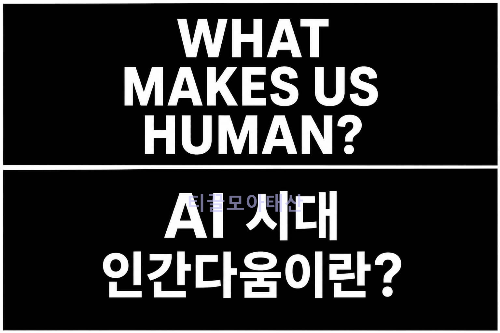
What makes us human in the age of artificial intelligence?
For many people, AI is not just a technological development.
It is forcing us to rethink what truly separates humans from machines.
And perhaps the answer is more important than ever.
The More Capable AI Becomes, the More We Question Ourselves
For centuries, intelligence was considered one of humanity's defining traits.
The ability to reason, calculate, learn, and solve problems set humans apart from other species.
But now AI can perform many of these tasks with incredible speed and accuracy.
This has created a new challenge.
If machines can think, analyze, and create, then what remains uniquely human?
The answer may not lie in intelligence alone.
Humanity Is More Than Information Processing
AI excels at processing information.
It can identify patterns, generate responses, and optimize decisions based on data.
But humans are more than information processors.
We experience:
- Love
- Joy
- Grief
- Hope
- Fear
- Wonder
These emotions shape how we see the world and influence every decision we make.
A machine can describe sadness.
A human can feel it.
That difference matters.
The Power of Human Experience
Every human life is shaped by personal experiences.
Our memories, relationships, successes, failures, and struggles create unique perspectives.
Two people can experience the same event and interpret it completely differently.
AI, however, learns from data.
Humans learn from life.
This ability to derive meaning from experience is one of the most powerful human qualities.
Creativity Is More Than Generation
Many AI systems can now create art, music, and written content.
Some outputs are impressive.
Yet creativity is not simply producing something new.
True creativity often comes from:
- Curiosity
- Emotion
- Personal expression
- Cultural understanding
- Human experience
A painting created after heartbreak carries meaning beyond its visual appearance.
A song inspired by hope reflects something deeply personal.
Human creativity is often rooted in lived experience rather than computation.
Empathy Remains a Human Superpower
One of the most valuable skills in the future may be empathy.
Empathy allows us to:
- Understand others
- Build trust
- Resolve conflict
- Form meaningful relationships
Businesses, communities, and families all depend on human connection.
While AI can simulate empathy through language, genuine emotional understanding remains deeply human.
As technology becomes more powerful, empathy may become even more valuable.
AI Highlights the Importance of Adaptability
The rapid rise of AI teaches another important lesson.
The future is unpredictable.
Jobs, industries, and technologies are changing faster than ever.
In this environment, adaptability becomes essential.
The people who thrive will not necessarily be those who know the most.
They will be those who can:
- Learn continuously
- Adapt quickly
- Embrace change
- Develop new perspectives
In many ways, adaptability is one of humanity's greatest strengths.
Meaning Cannot Be Automated
AI can help us complete tasks.
It can improve efficiency and productivity.
But meaning is something different.
Humans seek purpose.
We ask questions such as:
- Why am I here?
- What matters most?
- How can I make a difference?
These questions go beyond logic and data.
They belong to the human experience.
No algorithm can fully answer them for us.
The Future Will Reward Human Qualities
As AI takes over more routine work, the value of uniquely human abilities may increase.
These include:
Emotional Intelligence
Understanding people and relationships.
Creativity
Generating original ideas and new possibilities.
Ethical Judgment
Making decisions based on values and responsibility.
Adaptability
Navigating uncertainty and change.
Purpose-Driven Thinking
Creating meaning beyond productivity.
The future may belong not to those who compete with AI, but to those who develop the qualities AI cannot easily replicate.
Final Thoughts
Artificial intelligence is transforming the world.
But perhaps its most important impact is not technological.
Perhaps AI is helping humanity better understand itself.
The more capable machines become, the more clearly we see the value of human qualities.
Our emotions.
Our relationships.
Our creativity.
Our ability to find meaning.
In the age of artificial intelligence, being human is not about competing with machines.
It is about embracing the qualities that make us uniquely human.
And those qualities may become our greatest advantage in the future.
'글로벌 관심사_영문 버전' 카테고리의 다른 글
| When Machines Think, What Is Left for Humans? (0) | 2026.06.27 |
|---|---|
| What AI Teaches Us About the Future of Human Work (0) | 2026.05.12 |
| How to Stay Relevant in an AI-Driven World (0) | 2026.04.21 |
| The Future of Jobs Is Not About Skills, but Adaptability (0) | 2026.03.24 |
| Work in the Age of AI : Adapt or Fall Behind (0) | 2026.03.13 |
| Are We Ready for the World AI Is Creating? (0) | 2026.03.05 |
| The Hidden Cost of AI Convenience (0) | 2026.02.17 |
| Why the AI Age Feels Exciting and Terrifying at the Same Time (0) | 2026.02.08 |